 Car Accidents
 Motorcycle Accidents
 Uninsured Motorist Accidents
 Bicycle Accidents
 Bus Accidents
 Dog Bites
 Slip and Falls
 Premises Liability
 Product Liability
 Construction Accidents
 Assault & Battery
 Wrongful Death
 Truck Accidents
 Wrongful Termination
 Discrimination
 Sexual Harassment
 Civil Rights
 Wildfires
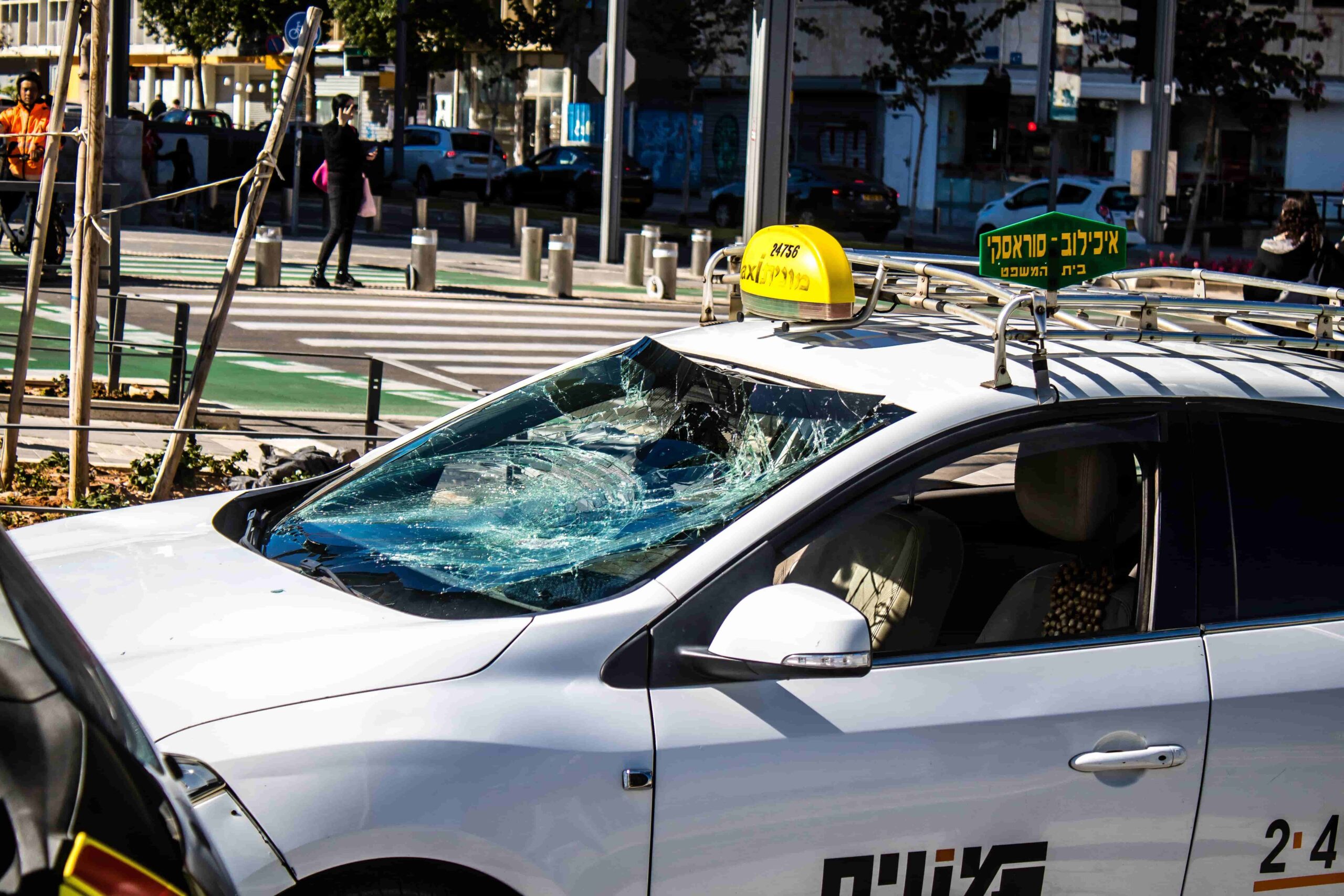
When you step into a taxi, the legal relationship between you and the driver is fundamentally different from when you ride in a friend’s car. The moment the meter starts, the driver and the company cease to be standard motorists and become common carriers.
This legal designation is significant if you have been injured. Under California Civil Code § 2100, a common carrier must use the utmost care and diligence for your safe carriage. This is a significantly higher standard of care than the reasonable care standard applied to regular drivers.
- In a typical car accident, a driver must simply act as a reasonably prudent person would.
- In a taxi injury case, even slight negligence that might be forgiven in a private vehicle may be grounds for liability.
However, holding a taxi company accountable is procedurally heavier than a standard auto claim. Taxi fleets in Los Angeles and Santa Monica are typically structured to insulate the owners from liability. Drivers are typically categorized as independent contractors, and the vehicles may be owned by holding companies separate from the dispatch service.
Furthermore, you will be dealing with commercial insurance adjusters. These professionals operate within a strict corporate framework, utilizing valuation software designed to standardize payouts and identify pre-existing conditions or comparative fault to reduce the claim’s value.
If you have questions about a recent incident, contact Olan Law to discuss your options. Your consultation is always free and there is no obligation to work with us.
Contact for a Free Consultation
Key Takeaways for Taxicab Injury Lawsuits
- Taxis owe a higher duty of care. As common carriers, they must use the “utmost care” for passenger safety, a stricter standard than for regular drivers.
- Identifying the correct defendant is complicated. Taxi companies use independent contractor classifications and shell companies to limit liability, requiring an investigation to prove an employer-employee relationship.
- Crucial evidence must be preserved immediately. Data from a taxi’s black box, dashcams, and dispatch logs can be deleted, so a legal demand to preserve it is a necessary first step.
The Common Carrier Doctrine: Why Your Case Is Different
The Utmost Care Standard
The core of your lawsuit rests on the elevated duty of care mandated by state law. As mentioned earlier, California Civil Code § 2100 requires common carriers to provide everything necessary for safe transport and to exercise a reasonable degree of skill.
This means we do not always need to prove the driver was reckless. We usually only need to prove they failed to exercise the highest degree of vigilance. This may include:
- Sudden starts and stops: In a private car, a hard brake might be annoying. In a taxi, if it causes you to hit the partition, it may be a breach of duty.
- Vehicle maintenance: A failure to inspect brakes or tires that leads to an accident is a direct violation of the carrier’s obligation to provide a safe vehicle.
- Driver fatigue: Commercial drivers have limits on their hours of service. Violating these federal or state limits serves as evidence of negligence.
The Distinction Between Passenger and Pedestrian
The utmost care standard generally applies only while you are a passenger inside the vehicle or in the process of boarding or alighting. If you were a pedestrian or a cyclist hit by a taxi in Santa Monica, the legal standard reverts to ordinary negligence.
In those scenarios, the taxi driver is treated like any other motorist: they must exercise reasonable care. However, because they are commercial operators, their insurance limits remain higher than private policies, and their corporate hiring practices still come under scrutiny.
Taxis vs. Rideshare Apps
We must clarify that this legal framework applies specifically to licensed municipal taxis—the yellow and green cabs you see on Wilshire or Ocean Avenue. While Uber and Lyft have similar insurance requirements, they operate under different statutes regarding Transportation Network Companies (TNCs). The procedural steps outlined here are specific to traditional taxi litigation.
Identifying the Defendants: Piercing the Corporate Veil
One of the immediate hurdles in a commercial vehicle lawsuit is determining exactly who to sue. In a standard crash, you sue the driver and their personal insurance pays. In a taxi accident, the driver has few personal assets, and the owner on the registration might be a shell company.
The Problem with the Independent Contractor Defense
Taxi companies frequently classify their drivers as independent contractors rather than employees. Their goal is to avoid vicarious liability, a legal doctrine that holds an employer responsible for the actions of their employees performing job-related duties.
If the company successfully argues the driver is an independent contractor, they may attempt to deny responsibility for the driver’s negligence. This would limit your recovery to the driver’s specific insurance policy, which might be lower than the company’s fleet policy.
Proving an Employer-Employee Relationship
 We counter this defense by examining the reality of the working relationship rather than the label in the contract. Courts look at the degree of control the company exercises over the driver. We investigate:
- Does the company require a specific uniform?
- Do they set the driver’s hours or shifts?
- Does the company strictly control the dispatch of rides?
- Are there rules regarding personal conduct and vehicle cleanliness?
If the company exercises significant control, the law may treat the driver as an employee regardless of what their contract says. This allows us to pursue the taxi company’s larger commercial insurance policy.
Additional Defendants
A thorough investigation reveals other liable parties beyond the driver and the dispatch company.
- The Vehicle Owner: The taxi medallion or permit might be owned by an investment group or holding company different from the dispatch service.
- Government Entities: If the accident was caused by a dangerous condition on a public road, such as a malfunction at a Santa Monica intersection or a massive pothole, the city or municipality may share liability.
The Evidence Phase: What You Must Preserve from Home
Evidence in commercial vehicle cases degrades much faster than in private auto cases. Taxi fleets handle thousands of rides; data is constantly overwritten to manage storage costs, and vehicles are repaired quickly to get them back on the road generating revenue.
The Electronic Control Module (ECM)
Modern taxis are equipped with data recorders, also called black boxes or ECMs. Along with the dispatch computer, these devices record metrics that human memory cannot retain.
This data includes vehicle speed five seconds before impact, brake application (or lack thereof), engine RPM, and seatbelt usage. This objective data serves as a check against subjective witness testimony. If a driver claims he was going the speed limit, the ECM provides the verified answer.
The Preservation of Evidence Letter
Because this data is digital and easily deleted, we do not wait for the lawsuit to be filed to request it. We send a specific legal demand known as a spoliation of evidence letter.
This letter puts the taxi company on formal notice that a claim is pending. It legally requires them to preserve:
- Dashcam footage (interior and exterior).
- Dispatch logs and GPS data for the date of the incident.
- Maintenance and repair records for the specific vehicle.
- The driver’s personnel file, including background checks and drug testing results.
If the company destroys this evidence after receiving the letter, the court may impose sanctions or instruct the jury to assume the missing evidence would have been unfavorable to the taxi company.
Continuity of Medical Care
While your lawyer manages the digital evidence, your role involves creating a clear medical record. Insurance adjusters look for gaps in care—periods where you did not see a doctor despite claiming to be in pain.
If you wait three weeks between appointments, an adjuster may argue that your injury had healed and was re-aggravated by something else. Consistent attendance at medical appointments creates a timeline that links your current condition directly to the taxi accident.
The Filing Process: Step-by-Step Mechanics
Step 1: The Administrative Claim (Government Entities)
This is the most time-sensitive component. If your accident involved a municipal vehicle (like a Big Blue Bus acting as a connector) or if we identify a dangerous road condition as a cause, you cannot simply file a lawsuit.
You must first file a government tort claim. Under the California Government Claims Act, you typically have only six months from the date of the accident to file this claim. This is significantly shorter than the standard two-year statute of limitations for personal injury. If you miss this six-month window, you are generally barred from suing the government entity.
Step 2: Filing the Complaint
Once administrative requirements are met, we file the Complaint. This legal document outlines your allegations against the driver and the taxi company. It establishes the facts of the accident, asserts the breach of the common carrier duty, and details the damages you are seeking.
We must file this in the appropriate venue. If the accident happened in Santa Monica, the case will likely be filed in the Superior Court of Los Angeles County. Filing in the wrong jurisdiction may lead to procedural delays.
Step 3: Service and Response
After filing, we must serve the lawsuit to the defendants. For a taxi corporation, this usually involves serving their Agent for Service of Process, listed with the Secretary of State.
The defense will then file an Answer. In this document, they typically deny liability and assert affirmative defenses. A common defense is comparative negligence—arguing that you were partially at fault for your own injuries.
Step 4: The Discovery Phase
This is where the actual investigation occurs within the court system as both sides exchange information. We utilize:
- Interrogatories: Written questions required to be answered under oath.
- Requests for Production: Demands for physical documents like maintenance logs and insurance policies.
- Depositions: We will question the taxi driver and company representatives under oath. You will likely also be deposed, where the defense attorney will ask about your injuries and the accident details.
Step 5: Mandatory Settlement Conferences (MSC)
Most personal injury cases in California are resolved before ever stepping into a courtroom. The court usually schedules a Mandatory Settlement Conference. During this phase, a neutral third party (often a judge or senior attorney) reviews the facts and encourages a resolution.
This is a negotiation where the defense balances the cost of going to trial against the strength of our evidence. Our goal is to present a case so prepared for trial that a fair settlement becomes the defense’s most logical option.
FAQs for Taxicab Injury Lawsuits
What if the taxi driver was unlicensed or driving a bandit taxi?
Unlicensed or bandit taxis are common in Los Angeles. If the vehicle was uninsured, you may be able to file a claim under your own Uninsured Motorist (UM) coverage, if you have it. This coverage steps in when the at-fault driver has no insurance or flees the scene.
Can I sue if I was hit by a taxi while riding a bicycle in Santa Monica?
Yes. While the common carrier standard of utmost care does not apply because you were not a passenger, you may still sue for ordinary negligence. The commercial insurance policy covering the taxi is still applicable to your damages.
Who pays my medical bills while the lawsuit is pending?
The taxi company will not pay your bills as they come in; they pay in a lump sum at the end. You must use your own health insurance or MedPay coverage in the interim. If you lack insurance, some doctors will treat you on a lien basis, meaning they agree to be paid out of your eventual settlement.
Does the common carrier rule apply to Uber and Lyft?
Generally, no. California courts and legislation currently treat Transportation Network Companies (TNCs) differently than traditional taxicabs regarding the common carrier designation. The duty of care and insurance structures for rideshare apps are distinct from those governing municipal taxis.
We Manage the Lawsuit While You Recover

The higher duty of care owed to you by a taxi service is a strong legal basis for a claim, but it only functions if the evidence is preserved and the procedural deadlines are met.
At Olan Law, we understand the specific statutes governing common carriers in California. We will assess the details of your accident, identify every liable party, and manage the procedural requirements so you can focus on your physical recovery.
Contact Olan Law today to schedule your free consultation.