 Car Accidents
 Motorcycle Accidents
 Uninsured Motorist Accidents
 Bicycle Accidents
 Bus Accidents
 Dog Bites
 Slip and Falls
 Premises Liability
 Product Liability
 Construction Accidents
 Assault & Battery
 Wrongful Death
 Truck Accidents
 Wrongful Termination
 Discrimination
 Sexual Harassment
 Civil Rights
 Wildfires
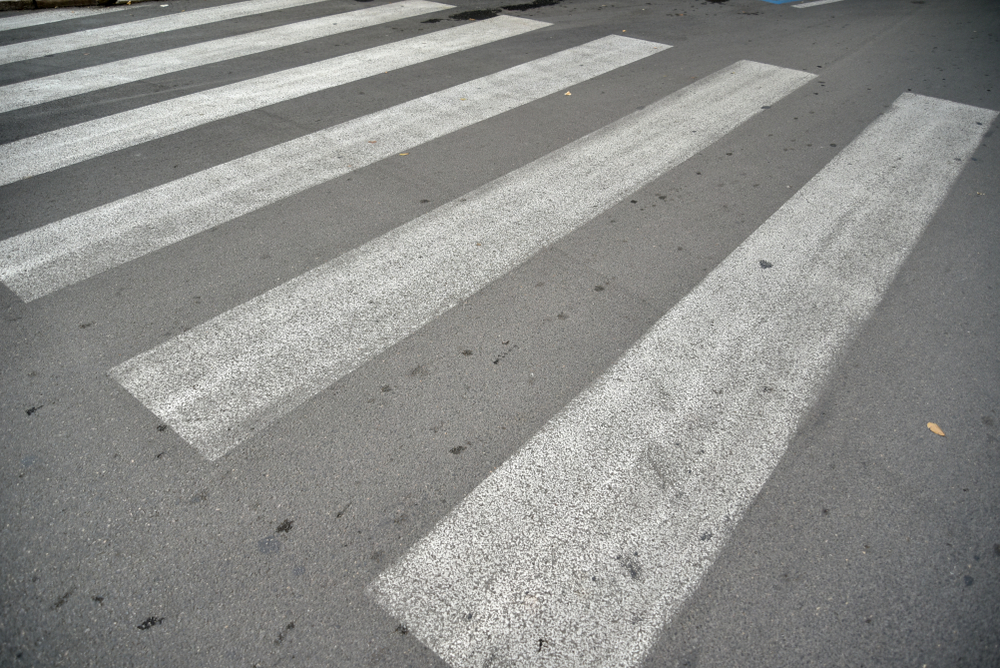
What Are a Pedestrian’s Legal Rights After Being Hit by a Car in California?
Pedestrians injured by vehicles in California often have the right to pursue compensation, even when they may have contributed to the accident. California’s comparative negligence rules reduce compensation based on the pedestrian’s share of fault rather than eliminating the claim entirely.
Understanding pedestrian rights after being hit by a car in California starts with knowing that the law protects injured pedestrians even when fault is shared. California requires drivers to yield to pedestrians in crosswalks, but liability depends on the specific facts of each accident rather than a single blanket rule.
Many people assume that being partially at fault for a pedestrian crosswalk accident in California prevents them from recovering anything. That assumption is incorrect. California’s comparative negligence system reduces compensation by the pedestrian’s percentage of fault, but does not eliminate the claim.
Key Takeaways for California Pedestrian Accident Claims
- California Vehicle Code § 21950 requires drivers to yield the right of way to pedestrians in both marked and unmarked crosswalks, but pedestrians also have a duty to exercise reasonable care.
- Comparative negligence in California means a pedestrian who is partially at fault may still recover compensation, reduced by their percentage of responsibility.
- The statute of limitations for most pedestrian injury claims is two years from the date of the accident under CCP § 335.1.
- When the driver is uninsured, the pedestrian’s own uninsured motorist coverage or a household member’s policy may provide a path to compensation.
- Medical records created soon after the accident connect injuries to the collision, which matters when insurers later evaluate the claim.
What Rights Do Pedestrians Have After Being Hit by a Car in California?
Injured pedestrians generally have the right to seek compensation when another person’s negligence contributed to the accident. That compensation may cover medical expenses, lost income, pain and suffering, and other documented losses.
A pedestrian hit by a car in California has rights that apply regardless of whether the accident happened in a marked crosswalk, an unmarked crosswalk, or outside a crosswalk entirely. The location of the accident affects how fault is divided, but it does not automatically determine whether a claim exists.
California law also protects pedestrians from being pressured into early settlements. An insurer’s first offer often arrives before the full scope of injuries and treatment costs is clear. Understanding those rights early helps prevent decisions that limit recovery later.
Do Pedestrians Always Have the Right of Way in California?
Pedestrians have important legal protections at crosswalks, but neither drivers nor pedestrians have an absolute right of way under California law. Both have legal duties that depend on the circumstances.
What Does California Vehicle Code § 21950 Require?
California Vehicle Code § 21950 requires drivers to yield the right of way to pedestrians crossing within any marked or unmarked crosswalk at an intersection. In plain English, that means a driver approaching a crosswalk where a pedestrian is crossing must slow down or stop to let the pedestrian pass safely.
An unmarked crosswalk exists at most intersections, even without painted lines. The law treats the natural extension of the sidewalk across the street as a crosswalk. Many drivers do not realize this, which contributes to accidents at intersections without visible crosswalk markings.
What Duties Do Pedestrians Have?
Pedestrians must exercise reasonable care for their own safety. California Vehicle Code § 21954 provides that pedestrians crossing outside a crosswalk must yield the right of way to vehicles. That does not mean a driver may hit a pedestrian outside a crosswalk without consequence. Drivers still have a duty to exercise due care to avoid colliding with any pedestrian.
The practical takeaway is that both parties share responsibility. Where the pedestrian was crossing and whether traffic signals were present affect how fault is divided, but neither fact alone determines the outcome.
Who Is Liable in a Pedestrian Crosswalk Accident?
Liability depends on what each person did or failed to do at the time of the collision. Two accidents at the same intersection may produce very different fault determinations based on the specific conduct involved. Comparing common scenarios helps explain why.
| Situation | Possible Effect on Liability |
|---|---|
| Driver failed to yield in crosswalk | Driver likely bears substantial fault |
| Pedestrian crossed against signal | Comparative negligence may apply |
| Distracted driver struck pedestrian | Driver’s negligence may increase |
| Poor visibility | May affect fault analysis depending on circumstances |
| Multiple vehicles involved | More than one party may share liability |
What Types of Driver Negligence Cause Pedestrian Accidents?
Driver negligence is the most common cause of pedestrian crosswalk accidents. Distracted driving, speeding, failure to yield, running red lights, and impaired driving all create conditions where a driver fails to see or stop for a pedestrian in time.
Along high-pedestrian corridors like Ocean Avenue, Third Street Promenade, and Santa Monica Boulevard, drivers encounter heavy foot traffic regularly. A driver who fails to slow down or check crosswalks in those areas may bear significant liability.
When Might a Property Owner or Government Entity Share Liability?
A negligent driver is not always the only responsible party. Poor street lighting, broken traffic signals, missing crosswalk markings, or dangerous road design may also contribute to a pedestrian accident.
When a government entity is responsible for maintaining the road or intersection, that entity may share liability. These situations are less common than driver negligence, but they do arise.
Claims against government entities have a shorter filing deadline. Under the California Government Claims Act, § 911.2, the injured person must file a government tort claim within six months. Missing that window may permanently bar the lawsuit.
Can a Pedestrian Recover Compensation If They Were Partially at Fault?
California’s pure comparative negligence system allows injured pedestrians to recover compensation even when they share some fault for the accident. Under Civil Code § 1714, compensation is reduced by the pedestrian’s percentage of responsibility rather than eliminated.
A practical example shows how the math works. A pedestrian crosses against the signal and is struck by a driver who was speeding. If total damages are $200,000 and the pedestrian is found 30 percent at fault, the recovery is reduced to $140,000. The pedestrian’s partial fault reduces the payout but does not prevent recovery entirely.
That distinction matters because insurers sometimes suggest that a pedestrian who crossed outside a crosswalk or against a signal has no claim. California law does not work that way. Shared fault is common in pedestrian accidents, and it does not automatically bar compensation.
What Insurance Covers a Pedestrian Accident in California?
The driver’s liability insurance is the primary source of compensation in most California pedestrian accidents. California requires drivers to carry minimum liability coverage of $30,000 per person and $60,000 per accident under California Insurance Code § 11580.1b.
When the driver’s coverage is insufficient or the driver is uninsured, other sources may be available. Serious pedestrian injuries often involve medical costs that exceed a single policy’s limits. Because multiple sources of coverage may be available, identifying each one matters:
- The at-fault driver’s bodily injury liability coverage
- Uninsured motorist (UM) coverage from the pedestrian’s own auto policy or a household member’s policy
- Underinsured motorist (UIM) coverage when the driver’s limits do not cover the full damages
- Health insurance for medical expenses regardless of fault
- Medical payments coverage (MedPay) if the pedestrian carries it on their own auto policy
Identifying all available coverage matters because a single policy often does not cover the full cost of serious pedestrian injuries. An attorney reviews the policies involved to determine which coverage applies.
What Happens When a Pedestrian Gets Hit in California?
The process after a California pedestrian accident generally moves through several stages: emergency medical care, a police investigation, insurance claims, ongoing medical treatment, and either settlement negotiations or litigation.
What Happens During the Investigation?
Police and insurance investigators piece together the accident by reviewing the scene, interviewing witnesses, and analyzing physical evidence. For pedestrian accidents along Pacific Coast Highway or busy intersections near Wilshire Boulevard, traffic camera footage and nearby business surveillance may provide critical evidence.
The police report documents the officer’s observations and any citations issued. That report often becomes an important piece of evidence during insurance negotiations, though it is not the final word on liability.
What Evidence Helps Prove a Pedestrian Accident Claim?
Insurers and attorneys rely on documentation to reconstruct what happened and assign fault. The stronger that record, the harder it is for an insurer to dispute the claim:
- Medical records documenting injuries, treatment, and recovery from the date of the accident forward
- The police report, including witness statements and any citations
- Photographs of the accident scene, crosswalk conditions, traffic signals, and visible injuries
- Surveillance or dashcam footage from nearby vehicles or businesses
- Records of lost wages, out-of-pocket expenses, and ongoing treatment costs
Each piece builds a more complete picture of what happened, why, and how the accident affected the pedestrian’s life. Gaps in documentation give the insurer room to reduce the offer.
What Role Does Medical Treatment Play in a Pedestrian Claim?
Medical records are the backbone of a pedestrian accident claim. They document the severity of injuries, the treatment required, and the connection between the accident and the harm. Seeking medical care promptly after the accident creates records that link injuries directly to the collision.
Some pedestrian injuries take time to fully develop. Concussions, internal injuries, and soft tissue damage may worsen in the days following the accident. Returning for follow-up care when new symptoms appear is just as important as the initial evaluation. Following recommended treatment plans also strengthens the documentation supporting a claim by showing consistent, uninterrupted care.
How Long Do You Have to File a Pedestrian Accident Lawsuit in California?
Most pedestrian injury claims must be filed within two years of the accident date under CCP § 335.1. Courts enforce this deadline strictly, and missing it generally eliminates the right to file.
Shorter deadlines apply when a government entity shares liability. If a city, county, or state agency is responsible for dangerous road conditions or a defective signal, the injured person must file a government tort claim within six months. Confirming which deadline applies early in the process prevents losing the right to pursue a claim due to missed deadlines.
When Should You Contact a Pedestrian Accident Attorney?
An attorney may help investigate the accident, identify all liable parties, gather and preserve evidence, and handle communication with insurers. That support is particularly important when injuries are serious, fault is disputed, or multiple insurance policies are involved.
Several situations make legal involvement especially valuable after a pedestrian accident:
- The driver’s insurer disputes liability or argues the pedestrian caused the accident
- Injuries require surgery, extended rehabilitation, or ongoing treatment
- The driver was uninsured or underinsured
- A government entity may be partly responsible for dangerous road conditions
- The pedestrian is unsure which insurance policies apply
Olan Law’s attorneys work directly with injured pedestrians to evaluate claims, gather evidence, and pursue fair compensation. A Santa Monica pedestrian accident attorney at our firm handles each case personally rather than passing it to support staff. For broader injury claims, a personal injury attorney in Santa Monica reviews the full scope of the case.
California Pedestrian Accident Questions Answered by Our Attorneys
Can I recover compensation if I was outside a crosswalk?
Yes. California’s comparative negligence rules allow recovery even when the pedestrian was outside a crosswalk. The pedestrian’s share of fault reduces the compensation but does not eliminate the claim.
Does the driver automatically get blamed for hitting a pedestrian?
No. Liability depends on the facts. Drivers have a duty to yield in crosswalks and exercise due care everywhere. However, if the pedestrian acted unreasonably, comparative negligence may shift some of the fault.
Can I sue if the driver was uninsured?
Yes. Uninsured motorist coverage from the pedestrian’s own auto policy or a household member’s policy may provide compensation. A Santa Monica car accident lawyer reviews the available policies to identify all potential coverage.
What damages may an injured pedestrian recover?
Injured pedestrians may pursue economic damages like medical expenses and lost wages, as well as non-economic damages like pain and suffering. The specific amount depends on injury severity, treatment costs, and the impact on daily life.
Getting Answers After a Pedestrian Accident in Santa Monica
Pedestrian accidents raise questions about rights, fault, and insurance that are difficult to sort through alone. Olan Law’s attorneys work directly with injured pedestrians to evaluate the claim, handle insurer communications, and explain legal options in plain terms. Contact Olan Law or call (310) 566-0010 for a free consultation on a contingency fee basis.